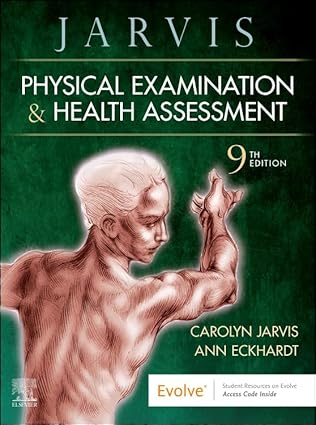
“Jarvis’s Health Assessment and Physical Examination” is a comprehensive medical textbook written by Kenneth R. Barlow, Stephen G. Mulley, and William J. Miller. The book focuses on the clinical evaluation of patients using a systematic approach to health assessment and physical examination.
Here is a detailed summary of the book:
Target Audience: The primary target audience for this book is undergraduate medical students, but it is also useful for other healthcare professionals such as nurses, physician assistants, and residents.
Key Features:
- Systematic Approach: The book emphasizes the importance of using a systematic approach to health assessment and physical examination. It provides step-by-step guidance on how to evaluate patients in various clinical contexts.
- Focus on Communication Skills: Effective communication is a crucial aspect of healthcare, and this book places great emphasis on developing strong communication skills for healthcare professionals.
- Use of Case Studies: The book uses case studies to illustrate key concepts and help learners develop their critical thinking skills.
- Visual Aids: The book includes numerous illustrations, photographs, and diagrams to aid in the learning process.
Chapter Structure: The book is divided into six sections:
- Clinical Skills: This section covers the essential clinical skills required for health assessment and physical examination, including taking a medical history, performing a physical examination, and using diagnostic tests.
- Patient Assessment: This section focuses on the systematic approach to patient assessment, including evaluating the patient’s overall health status, identifying problems, and developing a plan of care.
- Musculoskeletal Examination: This section provides a detailed guide to examining the musculoskeletal system, including evaluating joint mobility, muscle strength, and neurological function.
- Cardiovascular Examination: This section covers the clinical evaluation of cardiovascular disease, including auscultation, palpation, percussion, and percussion.
- Respiratory Examination: This section provides a comprehensive guide to examining the respiratory system, including evaluating lung expansion, breathing patterns, and lung sounds.
- Neurological Examination: This section focuses on the examination of the neurological system, including evaluating cranial nerves, muscle strength, reflexes, and sensory function.
Key Concepts: Some of the key concepts covered in this book include:
- The importance of a systematic approach to health assessment and physical examination
- Effective communication skills for healthcare professionals
- Developing strong clinical skills, including taking a medical history and performing a physical examination
- Using diagnostic tests and imaging techniques to aid in diagnosis
Conclusion: “Jarvis’s Health Assessment and Physical Examination” is a comprehensive medical textbook that provides a systematic approach to health assessment and physical examination. The book emphasizes the importance of effective communication skills, clinical skills, and using diagnostic tests to aid in diagnosis. It is an essential resource for undergraduate medical students, nurses, physician assistants, and other healthcare professionals seeking to develop their clinical skills.