By The Doctor
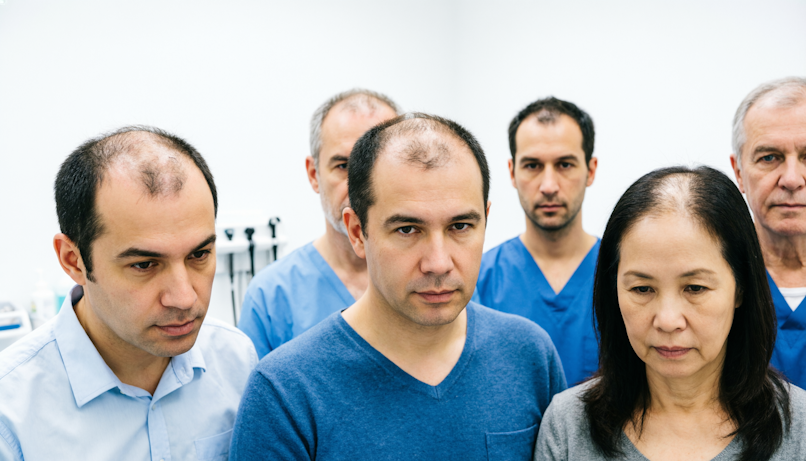
Hair plays a powerful role in identity, confidence, and self‑image. Whether someone is dealing with thinning hair, patchy bald spots, or excessive facial or body hair, these concerns often trigger quiet, anxious searches online. Men and women alike look up causes, treatments, and cosmetic solutions long before speaking with a clinician. Understanding why hair changes occur—and what can be done about them—can help reduce worry and guide individuals toward effective, evidence‑based options.
Understanding Hair Loss (Alopecia)
Hair loss, or alopecia, can occur gradually or suddenly. It may affect the scalp, eyebrows, beard, or body. Some forms are temporary and reversible; others are long‑term but manageable.
Common Types of Alopecia
1. Androgenic Alopecia (Pattern Baldness)
The most common form of hair loss.
- Men: Receding hairline, thinning crown
- Women: Widening part, diffuse thinning across the scalp
This type is influenced by genetics and hormones.
2. Telogen Effluvium
A temporary shedding triggered by stress, illness, childbirth, or major life changes. Hair falls out diffusely but usually regrows once the trigger resolves.
3. Alopecia Areata
An autoimmune condition causing round, smooth bald patches. It may affect the scalp, eyebrows, or beard.
4. Traction Alopecia
Caused by tight hairstyles that pull on the roots over time.
5. Scarring Alopecia
Less common; involves inflammation that damages hair follicles permanently.
Symptoms of Hair Loss
Patients often report:
- Gradual thinning on the scalp
- Receding hairline
- Patchy bald spots
- Excessive hair shedding in the shower or on the pillow
- Widening part line
- Reduced hair density or volume
- Itching or irritation (in some inflammatory conditions)
Hair loss can be emotionally distressing, especially when it progresses quickly or affects visible areas.
What Causes Hair Loss?
Hair loss can be triggered by:
- Genetics
- Hormonal changes (menopause, thyroid disorders, testosterone sensitivity)
- Stress or illness
- Nutritional deficiencies (iron, vitamin D, protein)
- Medications
- Autoimmune conditions
- Hairstyling practices
- Aging
Because causes vary widely, persistent or unexplained hair loss should be evaluated by a clinician.
Evidence‑Based Remedies for Hair Loss
1. Gentle Hair Care
Reducing breakage helps preserve existing hair:
- Avoid tight hairstyles
- Use gentle shampoos
- Limit heat styling
- Avoid harsh chemical treatments
2. Nutritional Support
A balanced diet supports hair growth. General strategies include:
- Adequate protein intake
- Iron‑rich foods
- Vitamin D sources
- Omega‑3 fatty acids
A clinician can help determine whether supplements are appropriate.
3. Stress Management
Stress can push hair into a shedding phase. Relaxation techniques, exercise, and sleep optimisation may help reduce telogen effluvium.
4. Medical Treatments
Clinicians may discuss various options depending on the cause. These may include topical therapies, oral medications, or procedural treatments. Treatment choices depend on diagnosis and should always be guided by a healthcare professional.
5. Cosmetic Solutions
Many individuals explore:
- Hair fibres
- Volumising products
- Strategic hairstyles
- Wigs or toppers
These can provide immediate confidence while medical treatments take effect.
Understanding Unwanted Facial/Body Hair
Excessive hair growth—known as hypertrichosis or hirsutism—can be equally distressing. While hypertrichosis refers to generalised hair growth, hirsutism specifically describes male‑pattern hair growth in women (chin, upper lip, chest, abdomen).
Common Symptoms
- Dark, coarse hair on the face
- Increased hair on the chest, abdomen, or back
- Rapid or unexpected hair growth
- Emotional distress or self‑consciousness
What Causes Excess Hair Growth?
1. Hormonal Imbalances
Elevated androgens (male hormones) can trigger hirsutism. Common causes include:
- Polycystic ovary syndrome (PCOS)
- Thyroid disorders
- Adrenal conditions
2. Genetics
Some individuals naturally have thicker or darker hair.
3. Medications
Certain medications may increase hair growth.
4. Aging
Hormonal shifts during menopause can change hair patterns.
Evidence‑Based Remedies for Unwanted Hair
1. Hair Removal Methods
Non‑medical options include:
- Shaving
- Waxing
- Threading
- Depilatory creams
- Laser hair reduction (long‑term reduction, not complete removal)
Laser treatments work best on dark hair and lighter skin tones, though newer technologies are expanding suitability.
2. Gentle Skin Care
To reduce irritation:
- Use soothing creams after hair removal
- Avoid harsh exfoliation
- Choose fragrance‑free products
3. Managing Underlying Conditions
If excess hair is linked to hormonal imbalance, a clinician may discuss treatment options tailored to the underlying cause.
4. Cosmetic Approaches
Many individuals use:
- Makeup to conceal facial hair
- Dermaplaning
- Brow shaping
- Professional grooming services
These can improve confidence while medical evaluation is underway.
Why People Search for Hair Issues Online
Hair concerns are deeply personal. Common search queries include:
- “Why is my hair thinning?”
- “Best treatments for pattern baldness”
- “How to stop shedding”
- “How to remove chin hair permanently”
- “PCOS facial hair solutions”
Because hair changes can feel embarrassing or emotionally charged, many people prefer to explore options privately before seeking professional help.
When to Seek Medical Attention
Consult a healthcare professional if you experience:
- Sudden or rapid hair loss
- Patchy bald spots
- Scalp pain, redness, or scaling
- Excess facial hair accompanied by irregular periods
- Hair loss after starting a new medication
- Hair changes with fatigue, weight changes, or other symptoms
A clinician can help identify underlying causes and discuss appropriate treatment options.
Living With Hair Changes
Hair loss and unwanted hair growth are common, treatable, and nothing to be ashamed of. With supportive care, medical guidance, and cosmetic strategies, most individuals achieve meaningful improvement. Addressing these concerns early can help restore confidence, comfort, and self‑image.
Questions and Answers
1. Pattern Baldness & General Thinning
Q1: “Why is my hair part getting wider, and is female pattern baldness reversible?”
Dr. Response: A widening part line is the classic early presentation of female pattern hair loss (androgenic alopecia). Unlike men, women rarely go completely bald; instead, hair follicles gradually miniaturize, producing finer, shorter strands over time. While it is generally a progressive genetic and hormonal condition rather than fully “reversible,” early medical intervention can halt progression and help reactivate miniaturized follicles to restore noticeable density.
Q2: “Does high testosterone or DHT cause pattern baldness in men, and how do DHT blockers work?”
Dr. Response: It is actually not the amount of circulating testosterone that causes baldness, but rather how sensitive your scalp’s hair follicles are to Dihydrotestosterone (DHT)—a byproduct of testosterone. In genetically susceptible follicles, DHT binds to receptors and causes them to shrink over time. DHT-blocking treatments work by inhibiting the enzyme (5-alpha reductase) that converts testosterone into DHT, preserving follicle health and protecting your hairline.
Q3: “How do I know if my receding hairline is just a ‘maturing hairline’ or early male pattern baldness?”
Dr. Response: A maturing hairline usually moves back about 1 to 2 centimeters above the top forehead crease, stays relatively symmetrical, and stabilizes in your late teens or early twenties without diffuse thinning behind it. Early male pattern baldness, however, pushes deeper into the temples (forming a distinct “M” or “V” shape), is often asymmetrical, and is accompanied by thinning hair density at the crown or hairline edge.
Q4: “Can cosmetic options like hair fibers or wigs damage my remaining hair?”
Dr. Response: When used correctly, cosmetic solutions like keratin hair fibers, volumizing sprays, wigs, and toppers are very safe and excellent for boosting daily confidence. However, ensure that toppers or wig clips do not pull tightly on your natural hair roots, as continuous tension can lead to traction alopecia. Clean your scalp regularly to prevent product buildup around hair follicles.
2. Excessive Shedding, Stress & Autoimmune Patches
Q5: “Why am I suddenly losing clumps of hair in the shower 2–3 months after being sick or super stressed?”
Dr. Response: This delay is characteristic of a condition called Telogen Effluvium. A major physical or emotional shock—such as high fever, severe illness, childbirth, major surgery, or sudden loss—causes a large percentage of growing hair follicles to enter their resting (telogen) phase prematurely. Because the resting phase lasts about 2 to 3 months before the hair sheds, the excessive loss appears long after the triggering event has passed.
Q6: “What are those sudden, smooth, round bald spots on my scalp or beard, and will the hair grow back?”
Dr. Response: Smooth, coin-sized, hairless patches are typical of Alopecia Areata, an autoimmune condition where your immune system mistakenly attacks hair follicles. The good news is that the hair follicles remain alive, meaning hair regrows in many cases. A doctor can evaluate the patches and recommend anti-inflammatory or targeted treatments to help quiet the immune response and accelerate regrowth.
Q7: “Can tight ponytails, braids, or extensions cause permanent bald spots?”
Dr. Response: Yes, constant pulling on the hair roots causes a condition called Traction Alopecia. In its early stages, traction alopecia causes temporary tenderness, small bumps, and reversible thinning around the hairline or temples. However, if tight hairstyles (like high ponytails, tight braids, or heavy extensions) are worn continuously for years, persistent mechanical strain can scar the follicles permanently. Switching to loose, low-tension styles resolves early damage.
Q8: “How long does Telogen Effluvium shedding usually last before hair starts growing back?”
Dr. Response: Acute Telogen Effluvium shedding typically lasts between 3 to 6 months. Once the underlying trigger (such as nutritional deficiency, acute stress, or illness) is resolved, hair shedding slows down back to a normal rate (50–100 hairs a day), and normal regrowth begins. Full density recovery can take 6 to 12 months simply because scalp hair grows at a rate of about half an inch per month.
3. Facial & Body Hair in Women (Hirsutism & PCOS)
Q9: “Why am I suddenly growing thick, dark hair on my chin, upper lip, or jawline as a woman?”
Dr. Response: Growth of coarse, dark hair in male-pattern distribution areas (chin, chest, abdomen) is called hirsutism. It is triggered when hair follicles in these regions are exposed to elevated levels of circulating androgens (male hormones) or are hypersensitive to normal levels. Because hirsutism is frequently linked to underlying endocrine shifts like Polycystic Ovary Syndrome (PCOS) or thyroid imbalances, medical evaluation is recommended.
Q10: “What is the difference between hirsutism and hypertrichosis?”
Dr. Response: Hirsutism is androgen-dependent, coarse hair growth in females occurring specifically in male-pattern distribution areas (chin, chest, back, lower abdomen). Hypertrichosis, on the other hand, refers to excess fine or coarse hair growth anywhere on the body that is not dependent on male hormones and can affect both men and women. Hypertrichosis is typically linked to genetics, certain medications, or systemic conditions.
Q11: “Does shaving my facial or body hair make it grow back thicker, darker, or faster?”
Dr. Response: No, this is one of the most persistent cosmetic myths! Shaving cuts the hair shaft at the skin’s surface, leaving a blunt, flat tip as it grows out. This blunt tip can feel stubbly and rough, making it appear temporarily thicker, but shaving does not alter the actual number, follicle diameter, growth rate, or color of your hair.
Q12: “Can PCOS cause BOTH hair loss on my head AND excess hair on my face at the same time?”
Dr. Response: Yes, this is a frequent and frustrating combination in Polycystic Ovary Syndrome (PCOS). Elevated androgen levels exert opposite effects depending on the hair follicle location: they miniaturize hair follicles on the scalp (causing female pattern thinning), while simultaneously stimulating follicle growth on the chin, face, and body (causing hirsutism). Managing the underlying hormonal imbalance addresses both symptoms.
4. Remedies, Supplements & Hair Removal Methods
Q13: “Does laser hair removal work permanently for chin and body hair, or will it just grow back?”
Dr. Response: Laser hair removal provides long-term hair reduction, rather than guaranteed 100% permanent removal. The laser targets melanin in active hair follicles to damage them. While it dramatically reduces hair density and thins remaining strands, new follicles can activate over time—especially if there is an unmanaged underlying hormonal drive like PCOS. Maintenance sessions are often needed every few months or years.
Q14: “Should I take Biotin, Iron, or Vitamin D for hair loss, or can supplements cause issues?”
Dr. Response: Nutritional supplementation only improves hair growth if you have an underlying deficiency. Iron deficiency (ferritin) and low Vitamin D are well-documented triggers for hair shedding, and replacing them under medical guidance helps. However, megadosing high-dose Biotin without a proven deficiency rarely helps hair growth and can severely distort important laboratory tests (including thyroid and heart cardiac markers).
Q15: “Is dermaplaning safe for women with coarse facial hair, or does it cause breakouts and ingrowns?”
Dr. Response: Dermaplaning (using a single sterile blade to shave fine peach fuzz and dead skin) is generally safe for fine hair, but if you have thick, coarse hair from hirsutism, dermaplaning close to the follicle opening can lead to folliculitis (inflamed follicles) or painful ingrown hairs. If you have active acne or sensitive skin, gentle trimming, waxing, or laser treatments under professional guidance are safer alternatives.
Q16: “Do scalp massages, rosemary oil, or heat-styling breaks really help regrow hair?”
Dr. Response:
- Scalp Massages: May increase local blood circulation and provide mild mechanical stimulation to follicles, though evidence for significant regrowth is limited.
- Rosemary Oil: Some preliminary studies suggest topical rosemary oil may offer mild benefit similar to low-strength minoxidil, but more rigorous research is required.
- Heat Breaks: Reducing flat irons and blow dryers directly prevents physical shaft breakage, preserving the visual volume of the hair you already have.
5. Root Causes, Hormones & Medical Diagnostics
Q17: “Could my sudden hair thinning be linked to a thyroid issue or perimenopause/menopause?”
Dr. Response: Absolutely. Thyroid hormones directly regulate hair follicle metabolism; both an underactive (hypothyroidism) and overactive (hyperthyroidism) thyroid can cause diffuse, uniform hair thinning. Similarly, during perimenopause and menopause, declining estrogen levels shift the estrogen-to-androgen ratio, allowing relative androgen dominance to thin scalp hair while encouraging fine facial hair growth.
Q18: “Can starting or stopping birth control pills cause severe hair shedding?”
Dr. Response: Yes. Oral contraceptives alter your hormonal baseline. Starting, switching, or stopping birth control pills can trigger a temporary episode of Telogen Effluvium due to sudden hormonal fluctuations. Additionally, birth control pills with high “androgenic index” progestins can sometimes worsen pattern hair loss in genetically predisposed women, whereas low-androgenic pills may help protect scalp hair.
Q19: “What ‘red flag’ symptoms mean my hair loss or extra hair growth requires immediate medical evaluation?”
Dr. Response: You should consult a physician promptly if you experience:
- Rapid onset of severe hair loss or wide, sudden bald patches
- Scalp pain, burning, redness, scaling, or pus-filled blisters (signs of scarring or infection)
- Excess facial hair growth accompanied by voice deepening, severe acne, or irregular/absent periods (signs of virilization)
- Unexplained weight changes, extreme fatigue, cold intolerance, or muscle weakness
Q20: “How do doctors actually test for underlying causes of hair loss or excess facial hair?”
Dr. Response: A thorough evaluation involves:
- Medical History & Scalp Exam: Looking at loss patterns, follicle openings, and pull-test shedding.
- Blood Tests: Checking complete blood count (CBC), ferritin (iron stores), Vitamin D, thyroid panel (TSH), and hormone levels (free/total testosterone, DHEAS, LH/FSH).
- Scalp Biopsy: In unclear or suspect cases (such as scarring alopecia), a tiny punch biopsy of the scalp tissue is examined under a microscope to evaluate follicle architecture and inflammation.